I am convinced that if we are to get on the right side of the world revolution, we as a nation must undergo a radical revolution of values.
— Dr. Martin Luther King, Jr. 1967
1. Human rights must be taken absolutely seriously. Every single person is entitled to dignity and human rights. No application needed. No exclusions at all. This is our highest priority.
Capitalism is not dead. But it is severely ill and its chronic contagion is spreading through the economic and social fibres of the world. However, it can be saved and resurrected, but only at the cost of a massive transfusion of blood, sweat, suffering and destruction. Such is the nature of a system based on competition and where material profit is the over-riding priority.


Nine out of ten times the first objection that people make to direct democracy is the possibility of ending up with demagogues whipping their fellow citizens up to all kinds of ridiculous things. "Look at Hitler," they say, which is interesting, because while Hitler never came in remote contact with direct democracy, he'd be something of a poster boy for how electoral systems can work in favour of demagogues.
Maybe the best person to take on issue number one -- the economy -- should be an economist?
At least, that's the thought of Laurence Kotlikoff, an economics professor at Boston University. He's planning on throwing his hat in the ring next week, announcing he's running for president as a third-party candidate.
Jan 3, 2011
Dear Friend of the Global Forum on Modern Direct Democracy:
Why Uruguay?
By now, you may have seen our invitation to join us from Nov. 14-16 in Montevideo, Uruguay for the 2012 Global Forum on Modern Direct Democracy. Yes, it is a very long trip, for most everyone involved in the global forum process. And yes, it is a small country. But we think it is a visit that you should make.
Uruguay has one of the world’s oldest systems of direct democracy, with early roots in the 19th century and a full constitutional provision for direct democracy since 1936. And its example has become relevant, as Latin America’s leading model and practitioner of direct democracy.
Over the past 20 years, Latin America has thrown off the vestiges of military rules and experienced a wave of constitutional reform to cement democratic gains. In virtually every country, constitutional reform has included the introduction of initiative, referendum and other modern direct democracy mechanisms. Citizens in Bolivia, Peru and Colombia have used them robustly.
But even as these tools have been added to constitutions, citizens have been unable to use them in many countries, because of a lack of democratic infrastructure. In some countries, the executive branch has used the tools to consolidate control and limit the power of citizens.
As Latin American citizens fight to win control of such tools, they have looked to Uruguay, where citizens have utilized the tools both locally and nationally on key issues, from treaties to pensions.
But Uruguay’s case also has cautions. The country has high hurdles for citizens’ initiatives: 10 percent of the citizenry for proposals to change the constitution and 25 percent of the citizenry to roll back laws. Its three-step referendum process is among the most complicated and onerous in the world. Uruguay’s example also shows how having the right to initiative is not enough; while Uruguay’s constitution recognizes a popular initiative for lawmaking, other constitutional provisions and political practice in the country have blocked the application of this tool.
This reality has sparked a lively debate in the country about how to reform direct democracy. That debate has echoed the global discussion of how to create tools that empower the vast majority of people – the “99 percent” in recent parlance – without being 1 percent. That is a debate being had in California and Germany and South Korea and everywhere around the world. But it is particularly immediate in Uruguay, and in Latin America.
This global forum will allows participants to observe and enter that debate, as the forum includes a meeting of hundreds of political scientists from across Latin America. At the same time, the forum will include reports on direct democracy developments on five other continents, as well as election officials from around the world who are expected to join us.
Also, we’ll hear follow-ups on work that began in the three previous forums -- in Aarau in 2008, in Seoul in 2009, and in San Francisco in 2010. These include the development of best practices for modern direct democracy and a new and improved “Navigator to Modern Direct Democracy” tool for data collection and analysis.
We look forward to seeing you this November in Uruguay—the center of the direct democratic world!
Sincerely,
Joe Mathews Bruno Kaufmann
Co-presidents, Global Forum on Modern Direct Democracy
P.S. For those who arrive early, a two-day briefing tour of Uruguayan direct democracy is planned for Nov. 12-13. And outings are also being designed for Saturday, Nov. 17. More details to follow.
Even though some are predicting the end of the world in 2012, there is a possibility it could turn out better than 2011 (a low bar). Many people who are not part of the political class continue to advance civilization and make things better for us — like the late Steve Jobs.
What has Occupy Wall Street accomplished? Sen. Bernie Sanders and Rep. Ted Deutch introduced a constitutional amendment to revoke corporate personhood. What's corporate personhood? Unbelievably, our federal court system decided that corporations have the same rights as people. They can own property, make TV commercials, and spend vast amounts of money buying politicians and elections. Despite the fact that corporations are people who do not eat, sleep, die, pay a fair share of taxes or get drafted in time of war. Revoke corporate personhood.

After a tumultuous 2011 in which many of the trends we had forecast became headline news around the world, we are now forewarning of an even more tumultuous year to come.
While it would give us great pleasure to forecast a 2012 of joy and prosperity – all brought about by the wisdom and benevolence of our fearless leaders – since we are not running for office or looking to profit by gulling the people, we tell it as we see it in our 12 Top Trends 2012.


I recently attended the daily general assembly meeting of Occupy Albany. These meetings, led by a team of skilled facilitators, occur at 5:30 p.m. There was noisy, rush hour traffic. It was cold, dark and raining.

And yet, despite an environment less than conducive to a productive meeting, what I experienced in the next hour was both inspiring and fun. It got me reflecting on how we might all benefit from the broader use of some of the consensus building and direct democracy techniques employed in the Occupy movement across the country.
Greetings. It's been awhile since our last newsletter, but "direct" democracy is doing better than ever, thanks to the Occupy movement, which regards it as both a goal and a strategy. See this video:http://www.youtube.com/watch?v=6dtD8RnGaRQ Please tell Occupy folks that the National Initiative is the most "shovel-ready" and practical plan for direct democracy in the USA. Most of them don't know about us, yet!
Our fearless leader, famed former Senator Mike Gravel, gave his best interview ever three weeks ago: http://www.youtube.com/watch?v=sddgNfGWVTU&feature=youtube_gdata
One problem that the National Initiative has is that it's abstract: It doesn't (directly) feed people, save a species or stop perpetual war and debt. So Mike Gravel is leading a project using existing state initiatives to create an independent Citizens 9/11 Commission: http://9-11cc.org/ Please donate: the Presidential election year 2012 is the best time for ballot initiatives and the attention they bring to the potential of national initiatives.
If 9/11 Truth isn't your cup of tea, you can donate to the National Initiative film or other projects at: http://demofound.org/donate.htm Ask others to donate before 12/31 to make it tax-deductible this year.
I got the National Conference of State Legislatures to enhance its Ballot Measures Database with an "Any" year option. Now it's easy to research the history of initiatives and referenda. NCSL's Jennie Bowser recommends using "text search" and setting "topic area" to "Any" for most specific research: http://www.ncsl.org/LegislaturesElections/ElectionsCampaigns/BallotMeasuresDatabase/tabid/16580/Default.aspx
http://Ballotpedia.org has become a great resource. Being a wiki like Wikipedia, YOU can help edit it, if you register. "Ballotpedia is compiling information on every ballot measure for every year, state and topic in U.S. history." They also cover representative government on the state level.
DVDs are available of the entire 5-day 2010 Global Forum on Modern Direct Democracy, featuring Ralph Nader, George Lakoff, Tom Hayden, Mike Gravel, Ward Connerly, Grover Norquist and many others: http://ni4d.us/en/global-forum-ordering
After 22 years of promoting direct democracy, here is my best "elevator pitch," which you are welcome to use to convince others:
Ballot initiatives are the origin of most reforms, recently including publicly financed elections (passed by initiative in 7 of 8 states with such "clean" elections), medical marijuana (in 10 of 16 states with it), term limits (in 14 of 15 states with them) and increasing minimum wages (in all 6 states that tried in 2006). See http://Vote.org/initiatives for references and more examples. The media have focused on the few problem initiatives in order to please politicians, who resent sharing power with the people, and who keep the initiative process difficult for us. (It's easy for the wealthy, who also control politicians.) The most fundamental reform is NATIONAL ballot initiatives with improvements like Oregon is now using: http://HealthyDemocracyOregon.org The best project is led by famed former Senator Mike Gravel: http://Vote.org
TIME Person of the Year and NI4D endorser Coleen Rowley is seeking volunteers to help conduct a symbolic referendum at the Jan. 3 Iowa and Jan. 9 New Hampshire caucuses asking "Democracy or Empire?" This is inspired by Supreme Court Justice Louis Brandeis' quote, "We can either have democracy in this country or we can have great wealth concentrated in the hands of a few, but we can't have both."
If you can help in Iowa, contact Coleen or Ross Rowley at 952 465-2866. If you can help in New Hampshire contact Ed Helm at edwardhelm@gmail.com. If you want to conduct a similar poll in your caucus state, contact either.
Have a good holiday season and don't despair: Democracy is coming to the USA!: http://www.youtube.com/watch?v=DU-RuR-qO4Y
Subscribe to our planet syndication feed.
Please reply to this newsletter with any questions or news submissions.
Thank you for your support!
Evan Ravitz
Democracy Foundation Volunteer

"We hold these truths to be self-evident, that all men are created equal, that they are endowed by their Creator with certain unalienable Rights, that among these are Life, Liberty and the pursuit of Happiness. — That to secure these rights, Governments are instituted among Men, deriving their just powers from the consent of the governed, — That whenever any Form of Government becomes destructive of these ends, it is the Right of the People to alter or to abolish it, and to institute new Government, laying its foundation on such principles and organizing its powers in such form, as to them shall seem most likely to effect their Safety and Happiness."
I'm pleased to announce that the next Global Forum on Modern Direct Democracy has been scheduled for November 14-16, 2012, in Montevideo, Uruguay.
Please watch this site for more details on the gathering, the first global forum in South America. Uruguay is a global leader in direct democracy, with a rich tradition of referendum that dates back to a visit its first president made to Switzerland in the late 19th century.
We hope you can begin to make plans now to join us at the global forum.
-- Joe Mathews, co-president, 2010 Global Forum on Modern Direct Democracy

In light of recent political events such as the Occupy Wall Street and Tea Party movements, it is more than clear that both sides of the political spectrum are just a teensy bit annoyed with our government officials.
That's a pretty big understatement.
The moment is right for some serious conversations about whether or not we should make drastic changes to our political system.
On November 3, Healthy Democracy presented at the 2011 Civic Engagement Conference in Salem, Oregon. HDF enjoyed an intimate conversation with the audience about the CIR, with great questions and discussion.
The event’s theme was Authentic Community Engagement: Transforming and Inspiring Oregon Communities. With this in mind, Healthy Democracy presented on the Citizens’ Initiative Review (CIR).
I am glad to see the effort of Occupy Greenville toward having a leaderless organization. If this occupation is to be successful, it must remain in the spirit of direct democracy. Movements like this are a struggle, and the focus should not be on what politician to elect or making demands this early, but to build the movement utilizing direct democracy and to hold educational meetings of which we all contribute.
United States Senator Mike Gravel has launched a Citizens 9/11 Commission employing a nationwide ballot-box initiative.
::::::::
Congratulations to Phil Keisling and Norma Paulus, 2011 recipients of the Bus Project’s Legend Award.
Phil and Norma are both on the advisory committee to Healthy Democracy Oregon, and have a long history of working to improve the democratic process for Oregonians.
California is celebrating a milestone: the 100th birthday of the initiative and referenda process. The Humane Society of the United States actively works to defend this process of direct democracy born in the Progressive Era, given that it has been used to drive vital social reforms, including those protecting animals.
Welcome to HDO's Ballot Measure Round-Up! In this series, we explore the initiative process and the prospective measures that may be put to vote in the 2012 election.
Since 1902, Oregon voters have had the power to enact new laws, change existing laws, or amend the Oregon Constitution through initiatives and referendums. Any citizen, acting individually or on behalf of an organization, may sponsor initiatives.
Last month, an international delegation of leaders in the field of direct democracy toured Western states to learn more about the ballot intiative process in the United States. Their final stop was Oregon, where they showed particular interest in learning about our innovative Citizens' Initiative Review.
July 21st, 2011
Salem, Ore. Governor Kitzhaber held a ceremonial signing in his office Thursday for House Bill 2634, the bill establishing the Citizens’ Initiative Review as a new feature of Oregon’s democratic process. He was joined by lawmakers, as well as citizens who participated in a 2010 pilot of the Citizens’ Initiative Review, to celebrate the passage of the historic legislation.
by Dr. Robert D. Crane
ONE hundred years ago today, California voters added the ballot initiative to the State Constitution, allowing citizens to use petitions to bring proposed statutes and constitutional amendments for a public vote.
by Mike Maharrey
The Occupy *insert place here* movement could represent an incredible opportunity to advance the idea of decentralization and Constitutional restraint. It could also pose the greatest threat to liberty seen in a long time.

“Have you ever had a dream, Neo, that you were so sure was real. What if you were unable to wake from that dream. How would you know the difference between the dream world and the real world?”
http://www.youtube.com/watch?v=-n0hKTizFwY
I awoke from a dream this morning. The dream was rife with complex texture, vivid visuals, rich personal experience, and deep meaning. It was more real than my waking world.

It was more real than my waking world ?!!
"Ironically, this is not far from the truth.”
I was part of another matrix for nearly 50 years. I believed what I saw on television, what I read in newspapers, and what others told me. Not all of it, mind you. I thought I could tell the difference between truth and untruth. I was wrong, but I didn’t know it. I was taught history in school, unaware that most history was lost, and the rest had been rewritten. I was taught religion in church, unaware of the control grid that was designed to funnel my spirit. I was taught politics and patriotism, unaware of the con-game being imposed on me. Everything was in place to shape me, mold me, fold me, any way you want me.
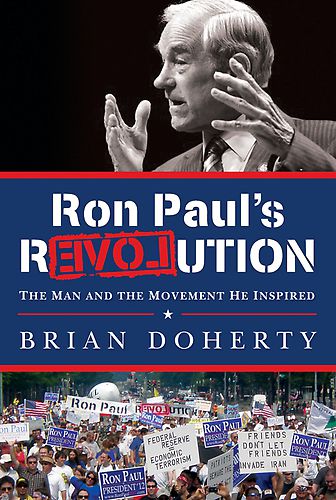
Something happened over time, an entire series of unlikely events, like a staircase in shape that led me out of that matrix. There was “The Matrix”, George Bush, 9/11, Chip Tatum, “Zeitgeist”, Phil Schneider, Ron Paul, and other prods and pokes that eventually opened my eyes. I learned to question everything I knew, and I realized that I had to live totally within the realm of uncertainty.
How deep does the rabbit hole go? Is there another matrix, where reality itself is an illusion? Where solid matter is mostly empty space? Where the laws of physics are the dimensions of our self-made prison? Where life itself is a funny joke, and that amusement is the purpose of existence?
I miss my dream.
Michael Efler is the spokesperson for 'Mehr Demokratie,' an initiative calling for more referenda and a better electoral law on the German and European level. He also says Western systems can learn from the Arab World.
"Mehr Demokratie" was founded in 1988. Today, the initiative has 13 regional branches, eight offices and close to 6,000 members. "Mehr Demokratie" is the largest non-party organization promoting democracy in the European Union. Michael Efler has been their spokesperson for two years.
I just received this press release. So it looks like I may not have to wait to get a better feel for what is going on. The protest is right by South Station so I’m thinking about taking the train. Boston has about the worst parking situation in the country, but nothing in downtown is really very far from anything else.
I ended up not being able to make it, but I did get a report, which I may post later.
“OCCUPY WALL STREET” INSPIRES PROTESTS IN BOSTON
To the Editor:
The elections of fall 2010 have long been over, and the new members of Congress have been in their seats since January. Nevertheless, it still appears that there are openly hostile relations between various members of Congress and the two political parties as a whole. This comes at the expense of the great citizens of this fine country, who want and need to be more involved with the decision making of our nation, above and beyond merely voting for those who will make all of the decisions, which is very little power indeed.
Like many Oregonians, we learned today of the passing of House Co-Speaker Arnie Roblan's son. We're very sorry to hear of such a loss to a great leader in our state. We at Healthy Democracy Oregon wish to express our deepest condolences to his family.
Oregonlive has more information, including where one should send cards for the family.
Dear friends, scholars, practitioners of direct democracy,
We are writing to invite you to two events on Sept. 21 in San Francisco – and to encourage you to RSVP now as space is limited.
Both events are free and focus on challenges to California direct democracy
1. The first is an evening event – free and open to the public – put together by Zocalo Public Square (www.zocalopublicsquare), a non-profit that connects people to ideas and each other. Other sponsors are the New America Foundation and Stanford’s Bill Lane Center for the American West.
The event’s title is “How Do We Put the People Back In the Initiative Process?” and will include experts in petition circulation, global direct democracy, California’s voting processes, and the biological factors that influence political participation. It takes place at 7:30 p.m. at the Fort Mason Center in San Francisco, and will run for a little over an hour. The event is followed by a reception—open to all—at which drinks will be served. An exhibition on Swiss and California direct democracy will debut at this event. While the event is free, it is important that you RSVP by making a reservation at http://www.zocalopublicsquare.org/upcoming.php?event_id=483 so that Zocalo will have enough seats, and drinks, for all attendees
2. The second event takes places on the same day – Sept. 21 – during the afternoon, 1 to 5 p.m., at the St. Francis Yacht Club (about a quarter-mile walk from the Fort Mason Center). Lunch will be served at 1.
This event – entitled “California Direct Democracy: The Next 60 Years” -- will focus specifically on ways to use deliberative processes, technology and social media. Among the confirmed presenters are Jim Fishkin of the Center for Deliberative Democracy at Stanford; Jude Barry of the electronic signature firm Verafirma; and Salvor Nordal, who leads the current constitutional convention in Iceland. The format will be an open roundtable discussion in which all attendees will participate.
Space is limited for this discussion. So if you are interested, please contact Joe Mathews directly at joe@joemathews.com (note only one “t” in mathews) to express your interest, and include an explanation of what you intend to add to the discussion.
We hope to see you in San Francisco on Sept. 21.
With best wishes,
Joe Mathews and Bruno Kaufmann
Co-presidents, Global Forum on Modern Direct Democracy
P.S. Attention Oregon: For those of you in or near Portland, or who might find yourself there, on September 26, there is a free, public daylong event at Lewis & Clark. The afternoon and evening events – including a 4 p.m. conversation with Oregon Secretary of State Kate Brown, and a 7 p.m. panel discussion on Oregon direct democracy -- are open to the public. The morning and lunchtime events are by invitation; if you’d like an invitation, please get in touch. Details are at: https://www.lclark.edu/about/leadership/provost/direc.php
Should California’s initiative process be improved? Sure. There are plenty of good ideas worth considering. Financial backers of proposed measures could be identified more quickly and thoroughly. More thorough vetting of proposals might lead to fewer surprises or legal reversals after adoption. Safeguards that guarantee a more neutral approach to the crafting of ballot language make sense.
Dear Editor
The elections of fall 2010 have long been over, and the new members of Congress have been in their seats since January. Nevertheless, it still appears that there are openly hostile relations between various members of Congress and the two political parties as a whole. This comes at the expense of the great citizens of this fine country, who want and need to be more involved with the decision making of our nation, above and beyond merely voting for those who will make all of the decisions, which is very little power indeed.
As the 2011 election cycle heats up, there are renewed calls to rein in the initiative process. Now 100 years old in some states, citizen initiatives have had enormous impact across the United States. This form of direct democracy has tackled everything from tax cuts to prohibition, the eight-hour work day and abortion rights. But critics contend it’s been hijacked by big-money special interest groups.
A former U.S. Senator and Democratic presidential candidate says the U.S. Congress is dysfunctional. Mike Gravel says the dysfunctionality is something that has been with the American people for a long long time.
With the success of Citizens Initiative Review panels in Oregon, a Massachusetts resident, Mr. Stephen Verbeek, is inspired to push for a similar initiative-process reform in Massachusetts. Please contact stephenverbeek@hotmail.com if you are interested in assisting him with this admirable work.
Okay, we’ll need to recap the week before moving into a quick review of the Big Ideas to Fix Everything.
This is in reference to “Voter ID laws hurting our democracy.” In ancient Greece there was direct democracy. All the people of Athens gathered into the great hall and voted on issues before them. As countries grew from small city-states into massive entities this sort of direct democracy became impossible.
The Internet has now brought us full circle.
California’s experiment in direct democracy – where citizens pass laws by voting on initiatives and referendums, sidestepping the legislature entirely – is facing three new reforms.
Although it seemed unlikely, Audrey was my friend.
You see, Audrey was practically quadriplegic, old, gray, swollen, bent, and beaten down from the ravages of her own immune system that was slowly dismantling her nervous system. Audrey was living with MS - Multiple Sclerosis. She had a little movement remaining in her left hand (the only limb she could move) and could control the joystick of her wheelchair and thus cruise the halls of her nursing home. Her mind was still sharp, and she became the voice for many of the other residents who were not as fortunate as she.
Imagine not being as fortunate as Audrey.
Audrey rarely complained despite the pain she endured, and it was her humor and smile that was most visible. She was fond of pointing out the certificate on her wall that read, "Good for one free visit" and signed by Jack Kevorkian (the doctor known for helping the terminally ill commit suicide).
During one of our many enjoyable conversations, she suddenly changed the subject and asked, "You know what I miss the most, being in this condition?" My mind whirled at all the possible answers - could it be loss of independence and mobility, using a bathroom rather than submitting to the humiliation of having someone change your diaper, being able to taste your food, sex, scratching an itch? "What?" I finally asked, being unable to prioritize any of the possibilities. "Being able to take a deep breath," she replied. I was floored - the simplest thing, that anyone can do, and that everyone does without a second thought - this was what she missed the most. My eyes were opened in that instant, and I saw how lucky I was, how lucky we all are, to be alive, to actually command our chest muscles to move and fill our lungs with life-sustaining air. How much we all take for granted!
Later that night, as I lay in bed thinking of what she had said, I took that deliberate deep breath, relished it, felt it charge my whole being, and I vowed never to forget the lesson, the gift I had been given. Audrey died from MS, and I lost my friend, but many a night when my head hits the pillow, I take a deliberate deep breath, embrace that subtle pleasure of living, and say a quiet "Thank you, Audrey" for teaching me how little I need to be happy.
======================

Nearly one hundred years ago, progressives succeeded in amending the Constitution of Washington State to provide for three powers of direct democracy: The initiative, the referendum, and the recall.
The purpose of establishing these three powers was not to supplant or replace our republican form of government, but rather, to give the people a way to get the gears of representative democracy turning in case they got stuck.
Majority of 1.21 billion plus population in India have been drawn immensely, through different mediums to politics, music/film, and cricket. Among the three, politics takes a centrestage and captures mind space affecting our day-to-day lives. Politics plays a significant role in the lives of the people, ultimately deciding cost of living, price of drugs, daily wages, sensex, and stock market.
I am pleased to present a new trailer for our Dear America documentary film.
This film will not be completed without your help. To watch the trailer and donate, please visit http://dearamericafilm.com/
Joshua Pritikin
Democracy Foundation Volunteer
By Joe Mathews
The good news: reform of the initiative process is finally on the table in California. The bad news: the left and the right are getting reform wrong.
| Shyam Ponappa: The challenges of direct democracy |
| India must weigh the pros and cons of various approaches to direct democracy and develop one of its own |
Welcome to the 2011Q2 edition of the National Initiative for Democracy newsletter.
We have a new way to help raise funds for The Democracy Foundation at no cost to you. Via our partnership with eScrip, you can contribute a percentage of your credit/debit card expenditures at no additional cost. For details, click here.
The recent film documenting the life of Daniel Ellsberg is now available online at no cost. Learn the fascinating details about how Mr. Ellsberg helped stop the Vietnam war.
We moved our NI4D-branded shop from Cafepress to Zazzle. Zazzle offers more options and lower cost than Cafepress. Order a mug, shirt, bag, sticker, button, and/or bumpersticker to raise awareness of NI4D. Order lots and give them to your friends.
Our flagship documentary, Dear America, is on hold due to lack of donations. Nicholas Holthaus, executive producer, continues to gather background material and local interviews. He is eager to arrange an east coast interview tour as soon as sufficient funds are available. I will be sending out another email as soon as the new trailer is available for your viewing pleasure.
Let us all commend the activists who commented on the following articles:
Subscribe to our planet syndication feed.
Please reply to this newsletter with any questions or news submissions.
Donations can be made at http://demofound.org/donate.htm
Thank you for your support!
Joshua Pritikin
Democracy Foundation Volunteer
Dear Participants and Friends of the 2010 Global Forum on
Modern Direct Democracy and U.S. Conference on Initiative & Referendum, It has been nearly a year since we gathered for five days
in San Francisco to discuss how to improve our direct democracy – in our
communities, cities, states, provinces, and home countries. With the passage of
time, it is possible to see how the event has changed lives and accelerated the
work of so many of us. Recent months have seen Citizens in Charge put
together a transpartisan gathering of speakers – most of them forum attendees –
to examine the initiative process, and challenges to, in the state of Colorado.
Global mapping and data collection have picked up speed, particularly at the Global Navigator to Direct
Democracy project. Keynote speaker David Altman of Uruguay and Chile
has published his groundbreaking new work, Direct Democracy Worldwide.
And the San Francisco Declaration,
the global forum’s statement of principles, has received signatures from
thousands of people across six continents. And, as we write this, we are on our way to Brussels for a
gathering of a new organization, Democracy International.
The group builds on the work of the forum to create an activist network of
those who work in and on behalf of direct democracy. Next year, global attention will shift to Europe, where –
in April 2012 – the very first transnational direct democratic tool, the
European Citizens Initiative, will be launched. And preparations are underway
to bring together the direct democracy crowd of professionals, activists,
journalists, and critics late next year – at the 2012 Global Forum, to take
place in Latin America. So we ask you at this time to reconnect with the forum and
your fellow participants. If your memory of the event has lagged, please order
the comprehensive DVD of the event here.
And if you want to catch up, there are three events and programs, late this
summer, to which we would like to invite you. SEPTEMBER 2/3: ROSTOCK 21 – THE EUROPEAN DEMOCRACY FORUM Twenty years ago people power activists from across Europe
gathered at the Baltic Sea to discuss and plan for new democratization steps in
recently reunified Europe. One of the key ideas at that time: the European
Citizens’ Initiative! Ten years ago it was in Rostock, Germany – again on the
Baltic -- that the Initiative and Referendum Institute Europe – now the
continent’s premier think tank on modern direct democracy -- was founded. This
year, yet another Rostock Democracy Forum will address the challenges ahead and
draft new innovations for more democracy at all levels. Please join this
conversation and, if you can, meet us in Rostock in the beginning of September! SEPTEMBER 14-16: PEOPLE POWER – THE ICELANDIC WAY After its big crisis, Iceland is about to reinvent itself.
The Icelanders have recently taken part in two popular votes on financial
markets and debt repayments. Now a fascinating process to rewrite the national
constitution is on the way, combining innovative crowdsourcing with a
constitutional convention. In September a first draft of the new
constitution will be presented and shared with the world at Briefing events, a
seminar and comparative workshops. Please participate in this process by coming
to Reykjavik and Iceland in mid-September and by taking stock of one the most exciting
current works on modern democracy. SEPTEMBER 20-27: USDD – DIRECT DEMOCRACY IN THE AMERICAN WEST This fall, we celebrate the 100th anniversary of direct
democracy in California – including the recall, referendum and the citizen’s
initiative – with a public event in San Francisco and a weeklong briefing tour
of Northern California, Arizona and Oregon. The program starts in San Francisco
on September 20 (evening), features large public events, small workshops and
high-level international exchanges. As the number of slots on the tour is
limited and many already have indicated their interest in joining the Briefing
team, please do not hesitate and register as soon as possible. In addition, Citizens in Charge Foundation is planning an event in Sacramento on the exact date of the 100th anniversary of direct democracy -- October 10. More details to come on that as we get closer. As those of you in the Northern Hemisphere begin summer,
we hope you will take this moment to reconnect – and make plans to attend one
of these September events around the globe. Best regards Joe Mathews and Bruno Kaufmann Co-presidents of the Global Forum on Modern Direct
Democracy
Today @ 09:23 CET
EUOBSERVER / COMMENT – Crisis, crisis, crisis. Once again political Europe is in the middle of an institutional turmoil. The possible default in Greece, bye-bye to Schengen and a European Summit with clueless leaders. And in the Guardian Martin Kettles offers the results of more than sixty years of the integration process: 'The nationalist right and the global markets have won. The internationalist social and Christian democrats have lost'.
by James Fishkin
California has long led the nation in trying to involve the public directly in the making of laws – this year marks the 100th anniversary of California’s initiative process. Ever since that signature Progressive Era reform, the state has been the heartland of the nation’s political experimentation.
This year marks the 100th anniversary of direct democracy in California, which is made up of the initiative, the referendum and the recall. The most famous recall in recent memory is when Arnold Schwarzenegger replaced Gov. Gray Davis in 2003. Referendums are used occasionally to repeal unpopular laws the Legislature has passed. But the initiative is the real prize, with citizen measures showing up on the ballot each election.
Direct democracy may not always be the best—or paradoxically even the most democratic—form of government, but sometimes it’s a great breath of fresh air. On June 12–13 Italians voted “yes” on four referendums in a resounding defeat for the Berlusconi government. It came just two weeks after the center-right was roundly voted down in municipal elections across Italy, and was a blow that even some of Berlusconi’s own colleagues think the prime minister cannot survive. But it was more than that.
The elections of fall 2010 are over, and the new members of Congress have been in their seats since January. Nevertheless, it still appears that there are openly hostile relations between various members of Congress and the two political parties as a whole. This comes at the expense of the great citizens of this fine country, who want and need to be more involved with the decision making of our nation, above and beyond merely voting for those who will make all of the decisions, which is very little power indeed.
I have studied direct democracy for years, but I was still unprepared to encounter at a conference last year the anger and alienation of American activists who rely heavily on California’s initiative and referendum process. They loved direct democracy, as I would have expected, but what shocked me was that this love stemmed from their total disenchantment with the institutions of representative democracy. This worried me.
This worried me a lot.
For Immediate Release
June 1, 2011
Contact: Tyrone Reitman
541-999-5088
Today the Oregon Senate took action on legislation to establish the Citizens’ Initiative Review as a permanent feature of Oregon’s initiative process.
A film project about the power of mass collaboration, government and the Internet. In his student flat in Colchester, Jack Howe is staring intently into his computer screen. He is picking the team for Ebbsfleet United’s FA Trophy Semi-Final match against Aldershot.
Around the world 35,000 other fans are doing the same thing, because together, they own and manage the football club. If distributed networks of people can run complex organisations such as football clubs, what else can they do?
This film explores the historical role of the Democratic Party as the graveyard of social movements, the massive influence of corporate finance in elections, the absurd disparities of wealth in the United States, the continuity and escalation of neocon policies under Obama, the insufficiency of mere voting as a path to reform, and differing conceptions of democracy itself.
ORONO — On May 18, Press Herald columnist Greg Kesich, in referring to the possible attempt to utilize the referendum process to veto the recently enacted health reform law, offered a column headlined "Mainers should just say 'no' to people's veto."
The Citizens’ Initiative Review (CIR) bill is headed to the Senate! Monday, May 23rd, the bill (HB 2634) was passed in the House, moving it onward to the other chamber. We barely had the chance to report the legislation was up for a vote in the House before the legislation was passed. The bill now moves to the Senate before it can be signed by the Governor.
The Citizens’ Initiative Review (CIR) bill is headed to the Senate! Monday, May 23rd, the bill (HB 2634) was passed in the House, moving it onward to the other chamber.
Today @ 09:18 CET
EUOBSERVER / COMMENT - The dust is now settling after the referendum in the UK earlier this month on changing the electoral system. The result, on a 41 percent turnout, was 68 percent in favour of keeping the existing system, and only 32 percent in favour of change. This is only second national referendum in British history, and there are lessons for everybody, both in the UK and in the rest of Europe.
On Friday, May 13, the Legislature’s joint budget committee approved the Citizens’ Initiative Review bill, HB 2634. The legislation advanced from the Joint Ways and Means Committee, and all signs say it will move onward to the House.
On Friday, May 13, the Legislature’s joint budget committee approved the Citizens’ Initiative Review bill, HB 2634.
A recent article about California in The Economist is giving us considerable food for thought. It’s a good argument for why Californians, and others, should seriously consider a Citizens’ Initiative Review diet.
A recent article about California in The Economist is giving us considerable food for thought. It’s a good argument for why Californians, and others, should serious
The Citizens’ Initiative Review bill, HB 2634, made one more step towards becoming law Monday, passing in the General Government sub-committee of the larger Joint Committee on Ways & Means.
HB 2634 creates a state commission to provide robust, visible oversight of the Citizens’ Initiative Review (CIR) and ensures the CIR continues to be published in a prominent place in the voter’s pamphlet.HB 2634 will have no fiscal impact on the state’s general fund.
The elections of fall 2010 have long been over, and the new members of Congress have been in their seats since January. Nevertheless, it still appears that there are openly hostile relations between various members of Congress and the two political parties as a whole. This comes at the expense of the great citizens of this fine country, who want and need to be more involved with the decision making of our nation, above and beyond merely voting for those who will make all of the decisions, which is very little power indeed.
MOLLY SCHOEMANN: Now that we’ve reached the point where millions of Americans can make their voices heard when it comes to which American Idol they prefer, what’s stopping us from taking this a few steps further, and allowing us to vote individually on more important issues?
The elections of fall 2010 are over, and the new members of Congress have been in their seats since January. However, it still appears that there are openly hostile relations between various members of Congress and the two political parties as a whole. This comes at the expense of the great citizens of this fine nation, above and beyond merely voting for those who will make all of the decisions, which is very little power indeed.
IN ALL 50 STATES citizens may occasionally have a referendum put before them by their state legislature. But only 24 states are considered to have statewide direct democracy, defined as a process in which citizens themselves place initiatives or referendums on ballots. The differences are huge. Of the more than 2,000 statewide initiatives in American history, the overwhelming majority have taken place in just a handful of states, led by Oregon, California and Colorado. In those states, direct democracy is in effect a fourth branch of government.
ONE HUNDRED YEARS ago Hiram Johnson, one of the most consequential governors in California’s history, called a special election. Johnson was a leader of a movement called Progressivism that reacted to America’s industrialisation by demanding women’s suffrage, direct election of United States senators (originally chosen by state legislatures) and other expansions of democracy. In this Californian election voters had to decide on three new types of balloting: referendums, recalls and initiatives. They accepted them all with enthusiasm.
IN 2004, while tossing chunks of meat to his pet Bengal tigers, Saif Qaddafi (then seen as the Libyan ruler’s reformist scion) outlined to a foreign visitor his plans to convert his father’s rambling theory of direct democracy into a real political system. Something on Swiss lines would be ideal.